GEO 2026: Visibility in ChatGPT and AI Search
Your website ranks in Google, but ChatGPT ignores it? Learn what GEO means in 2026 and how to check and improve your website's AI visibility.
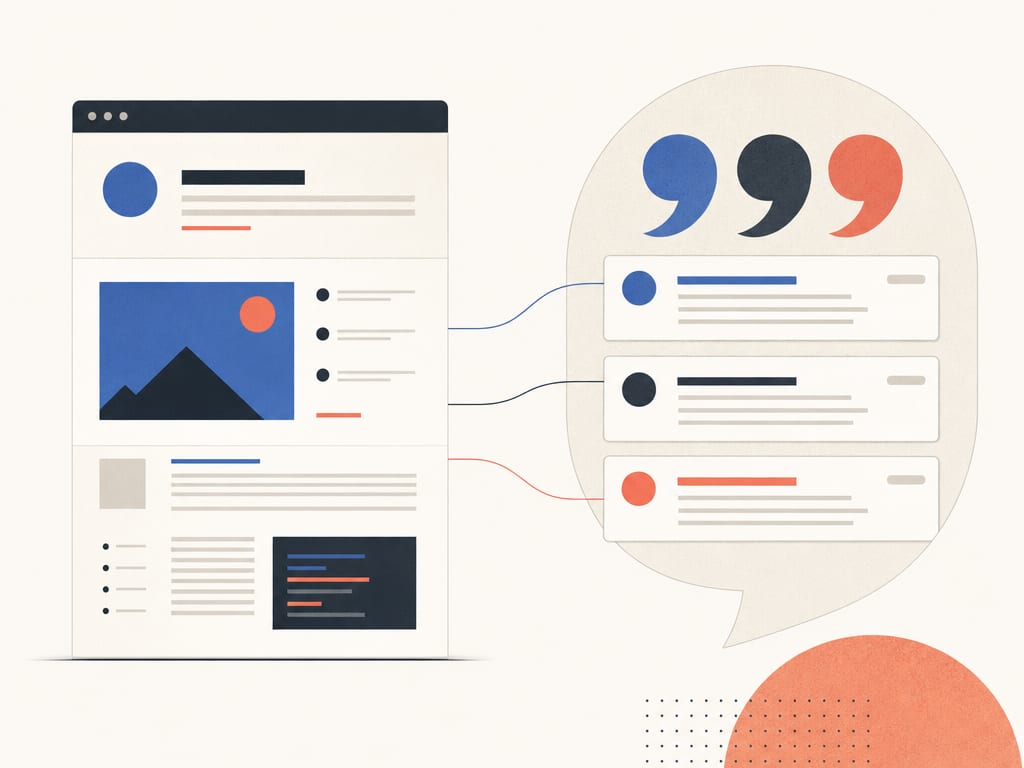
A competitor appears in a ChatGPT recommendation. Your company is missing, even though its website ranks reasonably well in Google. That is no reason to panic, but it is a good reason to check your website's AI visibility.
That is what GEO is about. This guide explains why a website gets found and cited by ChatGPT, Perplexity, or Google AI Overviews, how to test your current visibility, and which measures actually make sense in 2026.
What GEO Actually Means and What It Does Not
GEO stands for Generative Engine Optimization. It describes the work of making content easy for generative AI systems to find, understand, and use as a source in an answer.
These systems include ChatGPT with web search, Perplexity, Microsoft Copilot, Gemini, Google AI Overviews, and AI Mode. They do more than return a list of links. They write an answer directly and, depending on the system and query, cite a selected set of sources.
The difference between GEO and traditional SEO can therefore be stated simply: SEO aims for visibility in the search results. GEO aims for visibility inside the answer written by the AI.
That does not make SEO obsolete. Quite the opposite. An AI system will struggle to cite content that is technically inaccessible, thin, or poorly structured. Strong SEO foundations are a prerequisite for GEO, not its competitor.
The label should not be made more complicated than the task. Whether someone calls it GEO, AI search optimization, Answer Engine Optimization, or LLM optimization changes little in practice. Your content needs to be accessible, understandable, credible, and easy to cite.
Why AI Visibility Matters to Businesses Now
People no longer search only with short phrases such as "ERP consultant Hamburg." They ask complete questions: "Which ERP consultancy is a good fit for a mid-sized manufacturer with several locations?" An AI search can turn that question into a reasoned shortlist immediately.
This changes the visible part of search. The user receives a summary before visiting a website. Sometimes that answer is enough. Zero-click searches already existed through featured snippets and knowledge panels, but generative answers make this dynamic much more prominent.
How often Google AI Overviews appear depends heavily on the market, device, and keyword set being measured. A review by Slate compares several studies. Conservative mixed-intent datasets put coverage at roughly 15 to 25 percent. Informational and question-led query sets show substantially higher rates. One precise percentage without the methodology would sound reassuring and say very little.
AI-referred traffic is still relatively small, but it can be valuable. The Opollo 2026 AI Search Benchmark analyzed 312 B2B technology firms. AI-referred visits converted at an average of 14.2 percent, compared with 2.8 percent for organic Google visits. That is not a universal benchmark for every industry. It does suggest that users arriving after a detailed AI answer often have a more specific intent.
For small and mid-sized businesses, the conclusion is straightforward: if your company is absent from generated answers, it may remain invisible during a growing share of customer research. A strong Google ranking still helps, but it does not guarantee a mention.
Whether that visibility already produces visits and enquiries can now be measured in part. My guide explains how to measure AI traffic in GA4 and interpret the limits of its new channel.
How AI Systems Decide Which Sources to Cite
The exact selection mechanisms used by ChatGPT, Google, or Perplexity are not public. There is no GEO ranking dashboard where you tick three green boxes and wake up in first place. The prerequisites can still be audited.
Is the content technically accessible?
Important copy should already exist in the delivered HTML. If a crawler receives an empty page and a large JavaScript bundle has to load the content in the browser, retrieval becomes unnecessarily difficult. Server-side rendering, static generation, clean internal links, and a sensible robots.txt provide a reliable foundation.
Google's own guide to AI features in Search emphasizes that no secret AI file or special schema type is required. Crawlable pages, helpful content, and traditional SEO fundamentals remain essential.
Can the system understand the statement quickly?
A clear question in a heading and a direct answer in the first paragraph help both people and machines. Context, examples, and qualifications can follow. A paragraph that says "innovative solution" five times but never answers a concrete question is difficult to cite.
Structured data such as Article and FAQPage can also clarify what the page is, who wrote it, and which questions it answers. It does not replace the visible copy. Schema markup is a table of contents for machines, not an invisibility cloak for weak content.
Why should the source be trusted?
Visible authorship, a verifiable profile, sources, and first-hand experience give a statement context. On specialist topics, readers should be able to see who is writing and what the claim is based on. A real name, links to professional profiles, and concrete project examples help more than anonymous copy with a self-awarded expert badge.
Topical depth over time matters too. One article alone does not establish a recognizable specialist source. Several connected posts, service pages, case studies, and credible third-party mentions create a clearer overall picture.
At eugen.work, I already implement these foundations technically. Nuxt delivers server-rendered content, blog posts contain Article and FAQ data, and related topics are connected through internal content clusters. None of this guarantees a citation. It does remove avoidable barriers.
The Self-Check: Can ChatGPT Find Your Website?
A short test does not replace a GEO audit. It can show whether a closer look is worthwhile. Set aside ten minutes and document the answers so you have a comparable baseline rather than a general impression.
- Write down a real customer question. Choose one your website answers well, such as: "Which agency in Bremen builds fast multilingual B2B websites?"
- Test it in ChatGPT and Perplexity. Enable web search in both. Check not only whether your company appears, but also which sources are cited and which specific statement the system takes from them.
- Search the same question in Google. If an AI Overview appears, note its sources. Results can vary by location, account, and time, so one test is not a final verdict.
- Inspect the page source. Open an important page, select "View Page Source" in your browser, and search for a distinctive sentence. If it is there, a crawler can read it directly. If it is missing, the content may only load client-side.
- Repeat the test with three to five questions. Include different stages of the decision: understanding the problem, comparing solutions, and choosing a provider.
This sample checks the visible surface. It does not tell you whether structured data is valid, important sections are accidentally blocked, or your pages form a clear topical body of content.
For a systematic analysis, I use OctoBoost in client projects. The tool crawls a domain and evaluates technical SEO, content, and GEO/AEO signals. These include technical access, content structure, entity clarity, authority signals, and likely citability. I describe how I check such signals in more detail during a website relaunch.
The Five GEO Levers with the Greatest Impact
You do not need a checklist with 87 items. For most websites, these five measures are the most useful place to start.
- Answer questions clearly and directly. Use real customer questions as headings. Give the short answer immediately, then add context, an example, or an important qualification.
- Implement Article and FAQ data properly. Structured data helps systems classify a page. It must match the visible content and should be generated from the same editorial fields.
- Make authorship visible. Show a real name, a short profile, and relevant links to LinkedIn, GitHub, or publications. Expertise needs to be verifiable, not merely claimed.
- Deliver content from the server. Core copy should be present in the HTML without browser JavaScript. I show what this kind of server-side setup looks like using Kirby CMS and Nuxt.
- Publish something original. Use real project experience, data, screenshots, transparent comparisons, and case studies. A rewritten version of the first five Google results gives an AI system little reason to cite you.
These measures do more than improve visibility in ChatGPT or Perplexity. Clear answers, fast pages, visible authors, and useful examples also help traditional SEO and real readers. That is a good sign. Sustainable optimization rarely feels like a trick.
What GEO Is Not
GEO is not a plugin that automatically pushes a website into AI answers after installation. Nor is it a special text file that solves every other quality problem. An llms.txt file can present information in a structured way, but systems do not all use it consistently, and it replaces neither crawlability nor good content.
Most importantly, citations cannot be guaranteed. Generative systems continuously change their models, search indexes, and sources. Answers vary by wording, location, personalization, and time. Even a technically sound, useful page will not appear for every relevant question.
Anyone selling "guaranteed GEO rankings" is promising something they cannot reliably control. A more credible objective is to remove technical barriers, make content citable, cover relevant questions, and monitor repeatable tests over time.
Conclusion
GEO is not a new marketing discipline that starts from zero. It adds one question to good SEO practice: can an AI system not only find your content, but also understand, classify, and cite it with confidence?
If your website is technically sound, clearly structured, and genuinely useful, you are closer to strong AI visibility than most new shortcuts suggest. If you do not know where you stand, test a few real customer questions and inspect the source code. A systematic audit can then show where work is actually needed.
With a GEO check powered by OctoBoost, I review technical access, content structure, and citability. Send me your website and the customer questions that matter to you.
mail@eugen.workThis article was drafted and translated with AI assistance.